UISplitViewController Across Devices and OS Versions
Using UISplitViewController across multiple iOS/iPadOS versions and devices poses a few problems, depending on the desired functionality. In this post I will explain how to setup a UISplitViewController that has the following characteristics:
Works inside a
UITabBarControllerWorks on iOS/iPadOS 13.0+
Doesn’t use
UISplitViewController.Style.unspecifiedon iOS 14.0+Preserves the navigation stack when transitioning between regular and compact horizontal size classes
Meeting all these requires while updating [Scanula][scanula-website] has been a very educating process, which I hope is useful for others.
I’ve created a generic solution for this and made it available on GitHub, but if you’re trying to make these changes to an existing project or understand how this solution works it’s worth reading the rest of the post.
Using a `UISplitViewController` inside a `UITabBarController`
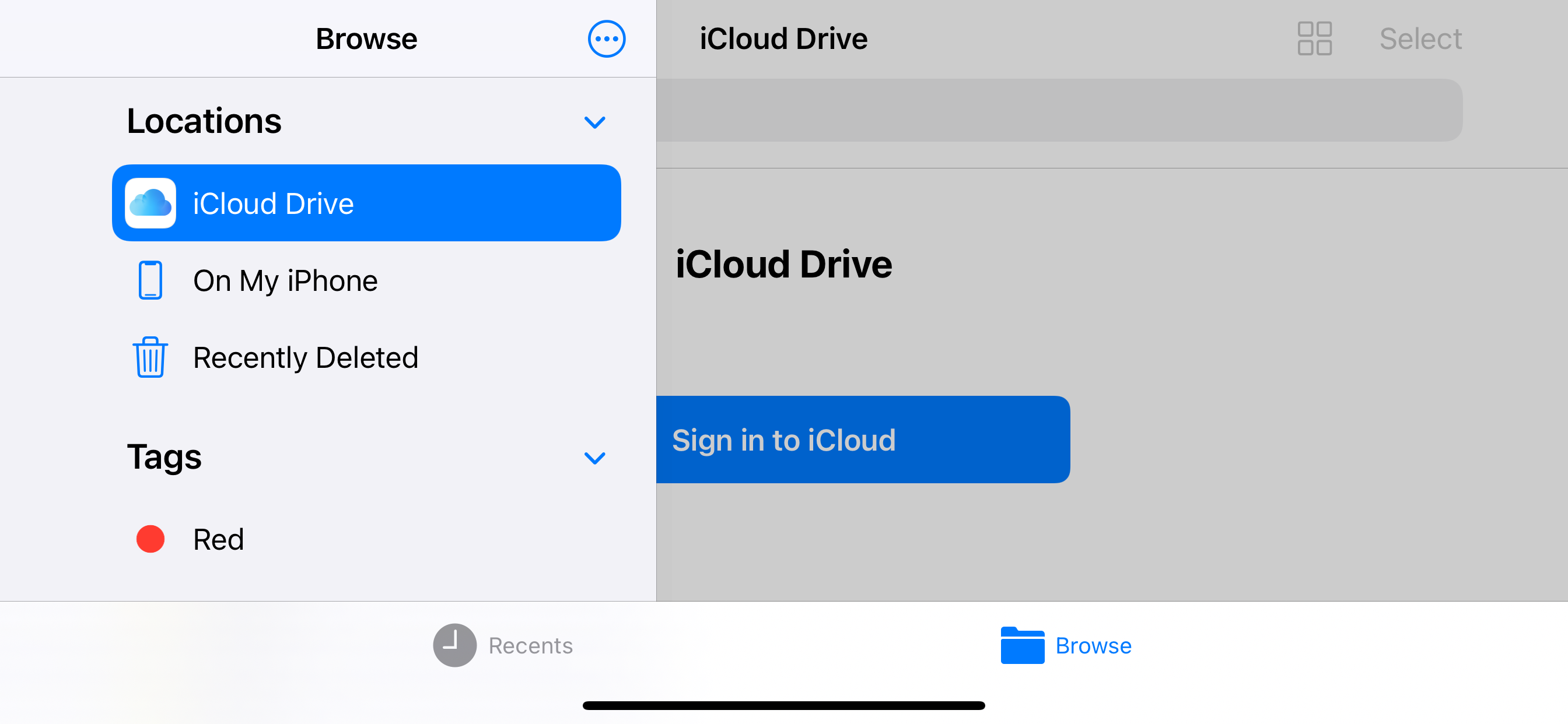
While this view controller hierarchy is invalid according to Apple, who state that “only certain arrangements are valid” and that a split view controller should only be a parent. However, many apps do this and have not had issues with app review. Even Apple do this with the Files app on iOS:
This however does cause a problem when not using UISplitViewController.Style.unspecified on iOS 14.0+: the horizontal size class will be compact no matter the horizontal size class of the UITabBarController. This appears to be done by UISplitViewController; overriding the trait collection in overrideTraitCollection(forChild:) within the parent UITabBarController is not honoured.
A quick solution to this is to override traitCollection, however this is not supported and will log the message “If you’re trying to override traits, you must use the appropriate API”.
The solution I have come to is to embed the UISplitViewController inside another UIViewController. This solution enables the use of doubleColumn and tripleColumn styles without requiring any function overrides.
Bonus UI Tests
Given how changes between OS versions can alter our functionality – and because I don’t trust any of the code I write – adding UI tests to this was very important to me. While writing the tests I learned a few tricks to allow for all the tests to be written using a single function.